

Last Updated: November 7, 2026
Quick Summary
The best cat grooming brushes for long hair depend on the job: the Maxpower Dual-Sided Rake is best overall for undercoat control, the Self-Cleaning Slicker Brush handles loose fur and light tangles, and the cuteNfuzzy Dematting Comb tackles mats. A mixed toolkit works better than one brush, so comb first, then slicker, then deshedding tool.
- The Maxpower Dual-Sided Rake costs $31.99 and combines a 9-tooth mat side with a 17-tooth undercoat side.
- The Self-Cleaning Slicker Brush costs $12.99 and has resin-tipped curved stainless steel bristles with a one-touch cleaning button.
- The Pawmpered De-Shedding Brush costs $16.99 and is built for heavy seasonal shedding on double-coated cats.
- The cuteNfuzzy Dematting Comb costs $8.95 and has 1.25-inch wave-shaped stainless steel blades.
- Brush two to three times a week in short sessions of around five minutes, and stop if a mat will not release after a few gentle passes.
Table of Contents
- Quick Comparison: 5 Best Cat Grooming Brushes for Long Hair
- How We Chose and Tested These Brushes
- 1. Maxpower Dual-Sided Grooming Rake: Best Overall for Long Fur
- 2. Self-Cleaning Slicker Brush: The Best Slicker Brush for Long Haired Cats
- 3. Pawmpered De-Shedding Brush: The Best Deshedding Brush for Long Hair Cats
- 4. cuteNfuzzy Dematting Comb: A Cat Grooming Comb for Mats and Tangles
- 5. CalmCare Dematting Rake: Best Budget Option for Sensitive Skin
- How to Groom a Long-Haired Cat: Routine, Order and Frequency
- Frequently Asked Questions
Quick Comparison: 5 Best Cat Grooming Brushes for Long Hair
Finding the 5 best cat grooming brushes for long hair starts with one hard truth: a single brush rarely handles a full coat. Long fur traps loose undercoat near the skin, forms mats behind the legs and under the collar, and collects dander that dulls the coat over time. This shortlist is built around tools that solve those specific problems rather than one-size-fits-all claims.
Quick Picks:
- Best Overall: Maxpower Dual-Sided Grooming Rake, two tooth counts in one tool
- Best Slicker: Self-Cleaning Slicker Brush, resin-tipped pins and one-touch cleaning
- Best Deshedding: Pawmpered De-Shedding Brush, smooth edges that protect skin
- Best for Mats: cuteNfuzzy Dematting Comb, wave-shaped stainless blades
- Best Budget: CalmCare Dematting Rake, gentle rotating pins for sensitive skin
| Brush | Price | Best For | Coat Type |
|---|---|---|---|
| Maxpower Dual-Sided Rake | $31.99 | Overall undercoat control | Long, double, wiry |
| Self-Cleaning Slicker Brush | $12.99 | Loose fur and light tangles | Long, medium |
| Pawmpered De-Shedding Brush | $16.99 | Heavy seasonal shedding | Long, double |
| cuteNfuzzy Dematting Comb | $8.95 | Mats and tangles | Long, thick |
| CalmCare Dematting Rake | $20.00 | Sensitive skin | Short, medium, long |
Price
How We Chose and Tested These Brushes
A cat grooming brush earns its place on a list like this by how it performs on long fur, not by how it looks on a shelf. Useful tools are judged on loose-fur pickup, detangling, cat comfort, ease of cleaning, and durability.
Testing standards for grooming tools vary widely across the industry. Business Insider's cat brush testing roundup worked through 35 brushes and combs with four cats, which shows how much trial a fair comparison takes. Our own selection leaned on the same principle: a tool only counts if a cat tolerates it long enough for the coat to actually improve. We also noted a common pattern: brushes that performed well on loose fur sometimes struggled with mats, and tools that excelled at dematting were often too aggressive for daily use. That is why our shortlist includes a mix of tool types rather than five variations of the same brush.
Brushing frequency often matters more than brush brand. A modest comb used regularly can do more than a premium rake used rarely. That is why every pick below includes a realistic use case and a note on which coat types and sensitivities it suits best.
1. Maxpower Dual-Sided Grooming Rake: Best Overall for Long Fur
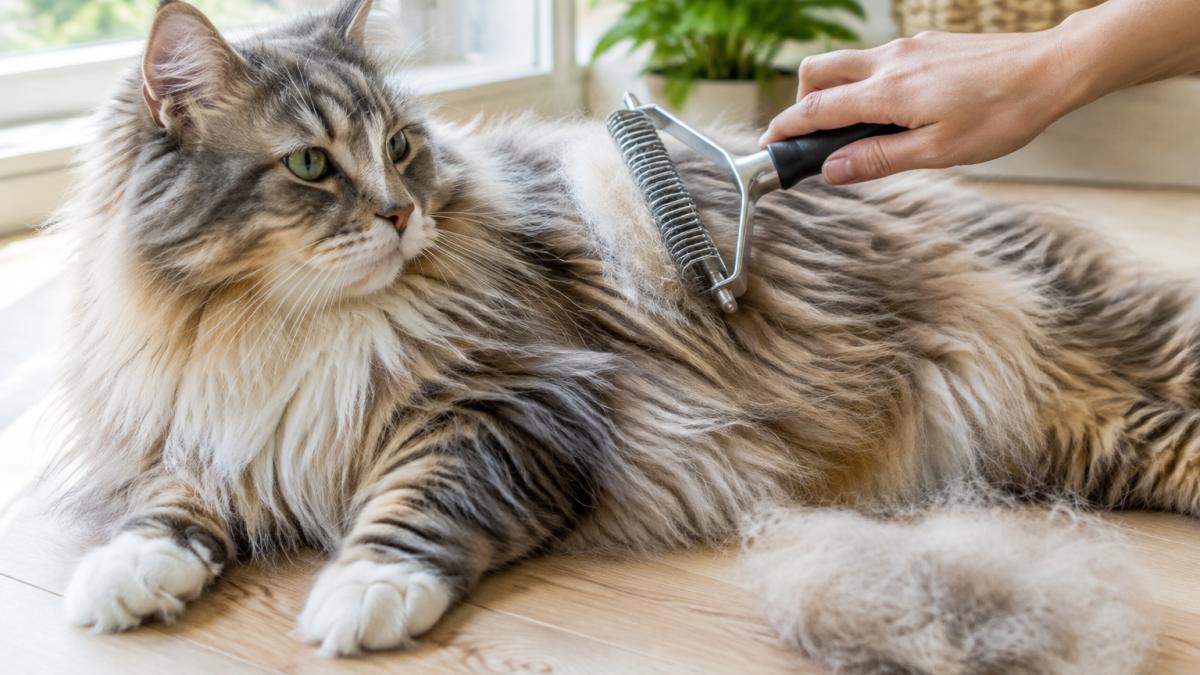
The Maxpower Dual-Sided Rake is a strong all-round choice because it combines two tooth configurations in one tool. The 9-tooth side cuts through mats, tangles, and knots, while the 17-tooth side thins loose undercoat and slows shedding. Rounded stainless-steel teeth glide without scratching, and the extra-wide head covers more coat per stroke.
It suits medium, long, wiry, and double coats, including Maine Coons, Ragdolls, and Persians. The non-slip rubber grip reduces hand fatigue during longer sessions.
Best for: households with one long-haired cat and a serious shedding season. Skip if: your cat has a short coat, since the teeth are built for dense fur.
Watch out: pressing hard with the mat side pulls skin. Use short, light strokes and let the teeth do the work.
2. Self-Cleaning Slicker Brush: The Best Slicker Brush for Long Haired Cats
A slicker brush for long haired cats should be comfortable enough for your cat to tolerate, and this self-cleaning model is designed with comfort in mind. Resin-tipped, curved stainless steel bristles reach the undercoat to lift loose fur and prevent mats, while the one-touch button retracts the pins so collected hair wipes away in seconds.
Easy cleaning helps keep a brush free of collected fur, and the gentle pin tips are designed for a softer grooming feel.
Self-cleaning pet slicker brush for dogs, cats and rabbits

Best for: daily grooming on long-haired cats that dislike firm pressure. Skip if: your cat has heavy, compacted mats, which need a comb first.
3. Pawmpered De-Shedding Brush: The Best Deshedding Brush for Long Hair Cats
Heavy shedding calls for a tool that reaches the undercoat, and the Pawmpered De-Shedding Brush is designed for that job. It is listed to go deep into the undercoat to remove shed fur while breaking up mats and tangles, with smooth edges intended to protect the skin.
Smooth edges are intended to protect the skin and provide a soothing massage during grooming.
De-shedding pet grooming brush for dogs and cats
Best for: seasonal shedding surges and double-coated cats. Skip if: your cat is mat-free and only needs light tidying.
4. cuteNfuzzy Dematting Comb: A Cat Grooming Comb for Mats and Tangles
This wave-shaped stainless steel dematting comb is designed to help remove tangles and mats. Its blades are 1.25 inches long. The ergonomic handle keeps your grip steady, and the TPE and PP handle materials suit households with skin allergies.
A common mistake is attacking a mat from the top. Work from the outer edge inward, holding the fur above the mat so the skin stays still. If a mat will not release after a few gentle passes, stop. Tight mats close to the skin belong with a professional groomer, not a home tool.
Pet dematting comb by cuteNfuzzy

Best for: long-haired cats prone to tangles behind the legs and under the collar. Skip if: your cat's coat is already tangle-free.
5. CalmCare Dematting Rake: Best Budget Option for Sensitive Skin
The CalmCare rake has gentle rotating pins designed to detangle without pulling and to massage rather than scratch. A one-click button releases collected fur, so cleanup takes a second.
Its lighter build suits short, medium, and long coats, which makes it a sensible first grooming tool for a newly adopted long-haired cat. The trade-off is reach: on very thick double coats, it lifts surface fur well but works less deeply than the Maxpower rake.
CalmCare dematting rake with one-click fur release

Best for: nervous cats and owners building a grooming habit. Skip if: your cat has dense, compacted undercoat that needs a heavier rake.
How to Groom a Long-Haired Cat: Routine, Order and Frequency
Knowing how to groom a long-haired cat comes down to order, frequency, and reading your cat's comfort. Brush two to three times a week, more during shedding season, and always work in the same sequence so your cat learns the pattern. A mixed toolkit with a comb and a brush is often more practical than a single tool for long-haired cats.
Our recommended session order:
- Comb first with a dematting comb to find tangles before brushing pushes them tighter. Work from the outer edge of any tangle inward, holding the fur above the mat so the skin stays still.
- Slicker brush next across the body to lift loose fur and dander. Use gentle, short strokes and let the pins do the work.
- Deshedding tool last on the back and flanks during heavy shedding weeks. Avoid pressing hard, especially on cats with thin undercoats.
- Finish with a soft cloth over the face and ears, where tools should not go.
Keep sessions short, around five minutes, and end on a calm note. For a deeper walkthrough of coat care, this long-haired cat care manual covers routine, health, and feeding in more detail.
Watch out: if a mat will not release after a few gentle passes, stop. Tight mats close to the skin belong with a professional groomer, not a home tool. Cutting a mat with scissors is risky because cat skin is thin and easily nicked.
For cats that are anxious or new to grooming, start with just one tool (a soft slicker or comb) and reward with treats after each short session. Gradually add tools over several weeks. Cats often tolerate grooming better when sessions are predictable and end before they get restless.
Frequently Asked Questions
What is the best cat grooming brush for a long-haired cat?
A dual-sided rake like the Maxpower can serve as a single all-round tool for many long-haired cats. Its 9-tooth side cuts through mats and tangles, while the 17-tooth side pulls loose undercoat before it lands on your sofa. Pair it with a slicker brush for finishing and a metal comb for spot checks behind the ears and under the legs. If your cat has a double coat, the Pawmpered De-Shedding Brush is the stronger pick for shedding season.
Is a slicker brush good for long-haired cats?
Yes, a slicker brush for long haired cats is a solid everyday tool, but it works best as part of a set rather than alone. The Self-Cleaning Slicker Brush reaches the undercoat with resin-tipped curved bristles and removes loose fur without scratching. Use it after a rake has broken up tangles, not instead of one. On dense coats, a slicker alone tends to skim the surface and leave mats underneath.
How often should you brush a long-haired cat?
Most long-haired cats need brushing two to three times a week, and daily during heavy shedding seasons. Short sessions of five to ten minutes beat one long weekly groom, because small amounts of loose fur are easier to remove before they compact into mats. Cats that tolerate brushing well can go daily. Anxious or sensitive cats do better with short, frequent sessions that end before they get restless.
How do you remove mats from a long-haired cat safely?
Never pull a mat out with a brush. Work a dematting comb or rake under the edge of the mat in short, gentle strokes, starting at the outer tip and moving inward. Hold the fur at the base near the skin so the pull stays on the hair, not the skin. If a mat is tight against the skin, covers a large area, or the skin underneath looks red or broken, stop and book a professional groomer or vet rather than cutting it out yourself.
What type of cat brush is best for my cat?
Match the tool to coat length, density and sensitivity. Long, thick or double coats need a rake or deshedding brush to reach the undercoat, plus a comb for mats. Fine or sensitive skin suits rounded or rotating pins, like the CalmCare rake. Short coats do fine with a slicker or bristle brush. If your cat flinches at stiff metal, start with a softer pin brush and build tolerance before moving to a rake.
