

Last Updated: November 5, 2026
Quick Summary
The best professional grooming shears in 2026 are judged on blade steel, edge grind, handle geometry, and fit for the coat in front of you, not price alone. Japanese steel and a convex edge slice cleanly, and a working kit usually holds straight, curved, thinning, and blender grooming shears.
- Straight shears cut clean solid lines for body work, legs, and topknot.
- Curved shears sculpt rounded shapes on faces, paws, tails, and hocks.
- Detail zones reward control, so 6.0 to 7.0 inches is the working range.
- Professional grooming shears need sharpening every 6 to 12 months with daily use.
- A loose tension screw folds hair instead of cutting it; fix with a quarter-turn.
Table of Contents
- What Separates the Best Professional Grooming Shears in 2026
- Shear Types Compared: Straight, Curved, Thinning and Blenders
- Dog Grooming Shears Thinning vs Blenders: Which Does Your Coat Need
- Zora Curved Shear A-800C: Shaping Rounded Faces, Paws and Tails
- Zora Curved Blender A-7533C: Softening Lines on Curved Surfaces
- Sizing Shears by Task, Dog Size and Coat Type
- Ergonomic Grooming Shears for Long-Term Use
- How to Maintain Dog Grooming Shears So They Stay Sharp
- Frequently Asked Questions
What Separates the Best Professional Grooming Shears in 2026
The global pet grooming market is projected to reach USD 19.5 billion in 2026, growing at 9.1% annually through 2036, according to Future Market Insights' pet grooming market report. That growth has flooded the market with options, and most buyers end up guessing. At Noble Paw Outfitters, we think the best professional grooming shears in 2026 are judged on four things: blade steel, edge grind, handle geometry, and how the shear suits the coat in front of you.
Price alone tells you very little. A well-made shear, like the Zora line we carry, can cut cleanly if the steel holds an edge and the tension stays true.
Grooming shears are hand tools with two blades that cut coat hair through a scissor action, distinguished from clippers by their ability to sculpt shape rather than remove bulk. Straight, curved, thinning, and blending types each solve a different problem.
How We Assessed These Shears
Most 2026 results are product pages, community threads, or informal opinions. To make the trade-offs easier to compare, we assessed each shear against a repeatable method rather than a single first impression. The method is transparent so you can apply it to any shear, including ones we do not carry.
Sharpness and cut quality. A properly ground edge slices cleanly, while a dull or poorly aligned edge folds or drags.
Balance and tension. A loose tension screw folds hair instead of cutting it.
Comfort and control. Handle geometry, finger rest, and pivot smoothness all affect how a shear feels over a long session.
Durability and ownership. Steel type, edge grind, and corrosion resistance all shape how long a shear lasts.
Fit for the task and the hand. A shear that suits body work on a large breed may be the wrong tool for a toy breed's face.
Below, we break down what matters, which type suits which task, and how to keep an edge sharp.
Shear Types Compared: Straight, Curved, Thinning and Blenders
Four shear types cover nearly every grooming task, and a working kit usually holds at least one of each. Groomboard's 2026 shear guide separates them into straight, curved, blenders, and chunkers, and that split holds up in practice.
| Shear Type | What It Does | Typical Use |
|---|---|---|
| Straight | Cuts clean, solid lines | Body work, legs, topknot |
| Curved | Sculpts rounded shapes | Faces, paws, tails, hocks |
| Thinning | Removes bulk without a hard line | Blending into short coat |
| Blender | Softens transitions and scissor marks | Finishing, merging lengths |
Straight shears do the heavy shaping. Curved shears follow the body's contours. Thinning shears carry a toothed edge that cuts only part of the hair, and blenders sit between thinning and finishing, softening lines without removing much length.
Blade Steel, Edge Grind and What It Means for Cutting
Japanese steel, the material in Zora shears, is known for durability and long-lasting edge retention. The convex edge found on quality grooming shears slices rather than pushes, which matters on soft coats where a beveled edge drags.
Watch out: a shear with a loose tension screw will fold hair instead of cutting it, and the fix is a quarter-turn on the pivot, not a new tool.
Dog Grooming Shears Thinning vs Blenders: Which Does Your Coat Need
Thinning shears remove bulk; blenders soften lines. The distinction is tooth count and cut ratio. A thinner with widely spaced teeth takes out more hair per snip, while a blender with finer teeth removes less and leaves a smoother finish.
For a thick or double coat, start with a thinner to reduce volume, then finish with a blender to erase the marks. For a fine coat that needs only light texturizing, a blender alone is enough.
If the coat is matted, do not reach for either. Break the mat first with a dematting tool, such as the Maxpower dual-sided grooming rake, then shear. Cutting into a tight mat pulls skin and dulls the blade.
Best for: double coats that need bulk reduction before shaping. Skip if: the coat is already short and even.
Zora Curved Shear A-800C: Shaping Rounded Faces, Paws and Tails
The Zora A-800C is a curved shear built for rounded work: teddy bear faces, pom-pom tails, paws, and legs. Its arc follows natural contours, which reduces the chance of nicking skin on sensitive areas. It is priced at $89 and is made from high-quality Japanese steel.
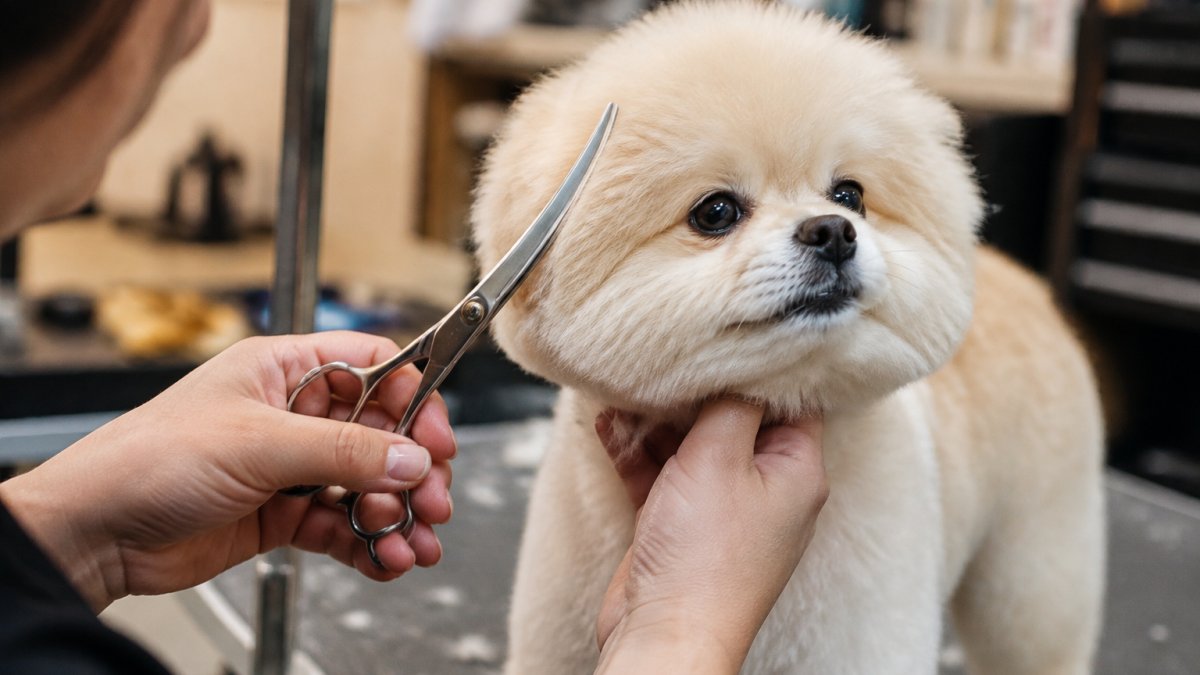
Breeds with round features, Bichons, Pomeranians, and Poodles among them, get the most from this shape. You can view the Zora A-800C curved shear to check sizing before you buy.
Zora Pet Grooming Curved Shear - Model A-800C →

Zora Curved Blender A-7533C: Softening Lines on Curved Surfaces
The A-7533C combines a blender's thinning action with a curved blade, so you can soften transitions on the muzzle, cheeks, hocks, and feet without flattening the round shape you just built. It is priced at $89 and is made from Japanese steel, like the rest of the Zora range.
One curved blender can handle both thinning and curved blending on a face. The Zora A-7533C curved blender page lists the full spec.

Sizing Shears by Task, Dog Size and Coat Type
Shear length should match the task, the dog, and the coat in front of you, not the groomer's height. Length is a common sizing consideration: too long for detail work can reduce control, and too short for body work can increase fatigue. Use the framework below rather than a single "best size" claim.
Start with the task. Detail zones (face, paws, sanitary, hocks, tail tip) reward control, so 6.0 to 7.0 inches is the working range. General body work on medium and large breeds rewards reach and coverage, so 7.5 to 8.0 inches is common.
Then match the dog's size and coat. Small dogs and toy breeds concentrate the work in tight zones, so smaller shears reduce wrist travel and accidental nicks. Medium and large breeds with dense or double coats benefit from longer straights for bulk shaping, with a shorter curved or blender reserved for faces and feet.
Match the shear type to the coat, not just the length. Curved shears generally run 6.5 to 8.0 inches; smaller curved sizes give control on faces and paws, larger sizes sculpt rounded body shapes on bigger breeds. Blenders typically run 6.0 to 7.5 inches.
Then fit the hand. A shear that is too long for your hand forces you to open wider per cut, which slows you down and increases fatigue. If your hands are smaller or you have repetitive-strain concerns, stay toward the shorter end of each range and prioritize an offset handle and finger rest.
If you are assembling a kit from scratch, a seven-piece pet scissor set shows the sizes commonly bundled together, which helps you see what a starter collection looks like before committing to individual tools.

Watch out: buying an 8-inch shear for face work on a toy breed gives you reach you cannot control, and control is what protects skin. The same logic applies in reverse: a 6-inch straight on a large double coat will slow you down and leave more visible lines.
Ergonomic Grooming Shears for Long-Term Use
Hand fatigue ends more grooming careers than dull blades do. An offset handle keeps the wrist in a neutral line, a finger rest takes pressure off the pinky, and a well-balanced pivot reduces the grip force needed per cut. These details matter more on a four-hour day than any single feature on the spec sheet.
A stable table at the right height also cuts strain, and a folding grooming table with adjustable armrests lets you set the dog at working height rather than bending to it.
Best for: full-time groomers and anyone grooming multiple dogs weekly. Skip if: you trim one small dog a month.
How to Maintain Dog Grooming Shears So They Stay Sharp
Professional grooming shears typically need sharpening every 6 to 12 months with regular daily use, according to a 2026 professional grooming shears guide, with the interval depending on coat type and cutting frequency. Home groomers can stretch that considerably.
Maintenance is simple and mostly about habits:
- Wipe blades after every session to clear hair and moisture
- Oil the pivot weekly with a drop of shear oil
- Check tension by cutting a tissue; it should slice, not fold
- Store in a case, never loose in a drawer
- Send to a professional sharpener
Watch out: cutting a matted coat or a dirty coat dulls an edge fast, and one pass through grit can cost you weeks of sharpness. Bathe and demat first.
Frequently Asked Questions
What is the difference between thinning shears and blenders?
Both remove bulk without cutting a solid line, but they work differently. Thinning shears usually have a single or double row of teeth and take out volume in a defined area, which suits thick or double coats. Blenders are designed to soften transitions and erase scissor marks between lengths. In practice, reach for thinners to reduce weight and blenders to finish a blend, especially around the face, legs and tail.
How often should professional grooming shears be sharpened?
Professional groomers working daily typically send shears for sharpening every 6 to 12 months, and the interval depends on coat type and how much cutting you do. Home groomers trimming one dog every few weeks can often stretch that further. Watch for pulling, snagging or folded coat ends instead of clean cuts, and check tension before assuming the edge is gone. A drop or a cut on a matted coat can dull an edge in a single session.
Are curved shears or straight shears better for a home grooming setup?
Straight shears handle body work, legs and clean lines, while curved shears shape rounded areas like the head, paws and tail. If you own one pair, straight shears cover more ground. If you are shaping teddy bear cuts or pom-poms, a curved shear such as the Zora A-800C follows the body's contours and reduces the risk of uneven cuts on sensitive spots. Many home groomers add a curved blender next to soften the lines between lengths.
Are expensive grooming shears worth it for home use?
The price gap usually comes down to steel, edge grind and balance. Shears made from high-quality Japanese steel hold an edge longer and cut with less hand pressure, which matters if you trim a wriggling dog. A budget set can work for light touch-ups, but dull blades pull coat and stress both of you. If you groom regularly at home, one well-made shear plus a blender often costs less over time than replacing cheap pairs every year.
How do I choose the right size grooming shears for my dog's breed?
Match length to the area and the coat. Curved shears for shaping generally run 6.5 to 8 inches, with 6 to 7 inch options giving more control on small dogs and tight zones like faces and paws, and 7.5 to 8 inch shears covering more surface on medium and large breeds. Blenders typically run 6 to 7.5 inches. Smaller dogs and detail work favor shorter blades; large, thick-coated breeds benefit from longer ones.
The difference between a frustrating groom and a clean one usually comes down to the tool in your hand and how well it fits the coat in front of you. At Noble Paw Outfitters, we build our grooming range around intentional design and quality-first materials, from Japanese-steel Zora shears to clippers and tables that support the whole routine. Explore the collection and get started with Noble Paw Outfitters to give your pet professional-grade care at home.
